
Okay, so check this out—crypto security doesn’t have to feel like voodoo. Wow. For years I treated private keys like sacred talismans, shoving seed phrases into password managers and sticky notes, then panicking whenever I updated my OS. My instinct said “air-gapped hardware,” but reality kept pulling me back to convenience. Seriously? Yeah.
Let’s be blunt: most people use exchanges or hot wallets because it’s easy. And that ease costs you control. On one hand you get fast trades and seamless DeFi access; on the other, your keys live on a device constantly exposed to internet threats. Initially I thought software wallets were “good enough,” but then I watched a friend lose thousands to a clipboard-stealing malware—so I rethought the whole model. Actually, wait—let me rephrase that: good enough for small amounts, maybe, but not when you’re serious about security.
Smart-card wallets bring something different to the table. They store private keys inside a secure element on a physical card, and they never export the key material. Transactions are signed on the card and only the signed payload leaves. That means an attacker who steals your phone or laptop still can’t extract your private key. My first impression when I tried one was simple: it felt like carrying a tiny vault in my pocket. It also felt oddly reassuring—like putting important documents in a safe instead of stuffing them in a drawer.
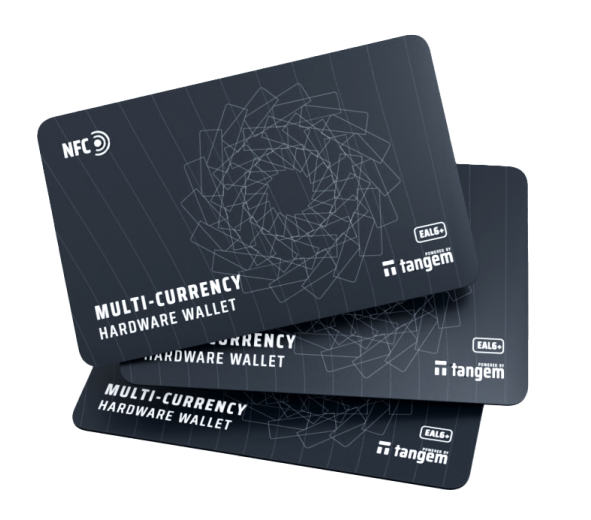
How smart-card wallets protect private keys
Think of the secure element as a fortified chip with very limited ways to interact with the outside world. Rather than exposing raw keys, it exposes signing functions. That reduces attack surface dramatically, though it doesn’t magically solve every threat. On the surface level this sounds trivial. But under the hood there are layers: secure boot, tamper resistance, firmware verification, and restricted cryptographic APIs. I won’t pretend it’s bulletproof—nothing is—but for the common threat models (phishing, remote malware, keyloggers), smart-card storage raises the bar substantially.
One real-world advantage is simplicity. No seed phrase frantically scribbled on paper and tucked into a drawer that you’ll forget about. Instead, the card itself acts as the secret. For many users that’s easier to manage—though it introduces different risks, like physical loss or damage. I’m biased, but I prefer losing a card I can replace with a backup flow than rebuilding a botched seed phrase recovery after a panic. (Oh, and by the way… backups still matter.)
Practical threat models and what to watch for
On one hand you have remote attackers who rely on malware, browser exploits, or social engineering. Smart-card wallets are strong here because private keys never touch the host. On the other hand, you have supply chain and physical attacks—if someone tampers with the card before you get it, or extracts an unprotected backup, you’re in trouble. So it’s not about a single silver bullet. It’s about choosing the right trade-offs for your risk profile.
Another nuance: transaction signing UX. If the card is too opaque—no way to verify outputs on a screen—you could still authorize malicious transactions without realizing it. That’s why device design matters. Cards that pair with a phone and show transaction details, or that use companion apps with clear UX, mitigate that risk. Check the device’s attestation and whether the vendor supports verified firmware updates. Little details like those separate polished solutions from gimmicks.
A recommendation from hands-on experience
I’ve tested a handful of smart-card wallets over the years. One that stuck with me for day-to-day use—because of its form factor and security model—is tangem. The physical card feels robust, setup is straightforward, and the design philosophy favors keeping keys isolated while staying convenient. That combination is rare. Don’t take my word as gospel; test for yourself, but the balance between security and usability here made me change how I store mid-size holdings.
Here’s what I like about that approach: it acknowledges human behavior. People want something they can carry, tap, or slide into a wallet. If security requires a dozen steps and an engineer’s patience, most users will short-circuit the process and choose convenience over safety. The best solutions nudge users toward safe behavior without making them experts.
Best practices when using a smart-card wallet
1) Treat the card like cash. If it’s lost, act fast. 2) Use an additional backup method—ideally one that doesn’t recreate a single point of failure. Multi-sig arrangements can be a great option here. 3) Keep firmware up to date from the vendor’s official channels. 4) Verify transaction details on a trusted UI every time. That sounds obvious but people rush. This part bugs me.
Also: consider the lifecycle. If the vendor stops supporting the product, how do you migrate? I’m not 100% sure how every card handles end-of-life, and that’s worth asking before you commit. Ask about attestation, recovery options, and whether the card implements industry standards for key derivation and signing.
FAQ
Is a smart-card wallet safer than a traditional hardware wallet?
Often yes for most remote threats, because the keys never leave a secure element on the card. But “safer” depends on which risks you care about. For physical theft or supply-chain tampering, the outcomes vary by vendor and model.
How do I recover funds if I lose the card?
Recovery varies. Some cards use delegated backup flows or let you set up multi-sig so losing one card doesn’t mean losing funds. Others require a separately stored recovery mechanism. Always verify the vendor’s recovery process before trusting them with significant holdings.
Can I use a smart-card wallet with DeFi and dApps?
Yes, many smart-card solutions integrate with wallets and dApps via companion apps or browser bridges, but UX differs. Expect an extra confirmation step on the card side for signing transactions—this is intentional and good.